The Abegg-Stiftung’sholdings of Iranian and Indian textiles of the sixteenth to the nineteenth century encompass around 100 inventory numbers. While most of them are patterned silk weavings and fabric fragments, they include some large hangings with borders, as well as silk garments and sashes. Also featured in the catalogue are several resist-dyed and printed cotton fabrics. These textiles are currently being studied, conserved and photographed, and their materials and weaves analysed as part of a publication project. The results of our technical and material analyses have in some instances led to new attributions. The weave structures of some fabrics that were regarded as Iranian at the time of their acquisition, for example, have since proven to be Indian manufactures. Any traces of earlier reworkings or stamp marks may offer valuable clues as to how the textiles were once used or where they were kept. Our approach to textiles featuring figural scenes entails studying their iconography and comparing them with similar scenes in the paintings and literature of that period. Research trips to other museums have made it possible for similar textiles from other collections to be studied, which in turn has allowed the Abegg-Stiftung’stextile holdings to be classified more accurately.
The first fruits of this research project were presented to the public in the 2025 exhibition of Indian textiles, «Flourishing India – Textiles from the MughalEmpire». An exhibition of the holdings of Iranian textiles at the Abegg-Stiftung is currently being planned for 2029. The goal is to complete the catalogue in time for this second exhibition. The book will be published in Englishto make it accessible to a wide readership.
Dr. Anna Jolly
Curator of Textiles of the 16th–18thCentury
Nadine Kilchhofer, textile conservator
Dr. Agnieszka Woś Jucker, textile conservator
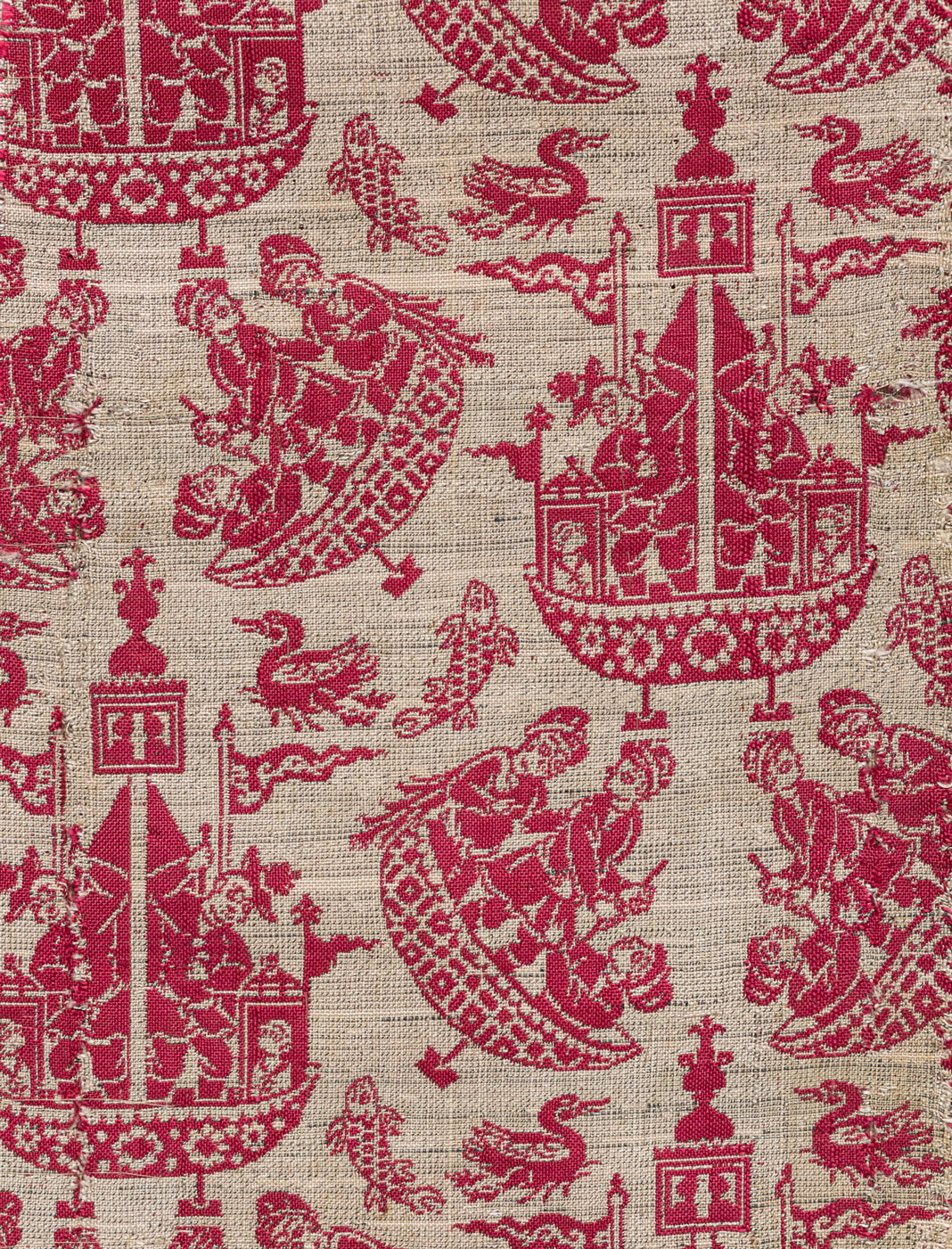
Double weave (detail), Iran, c. 1600, silk and metal threads, Abegg-Stiftung, inv. no. 680 | The pattern shows little boats with figures, which to judge by their Western-style of dress seem to be Europeans.
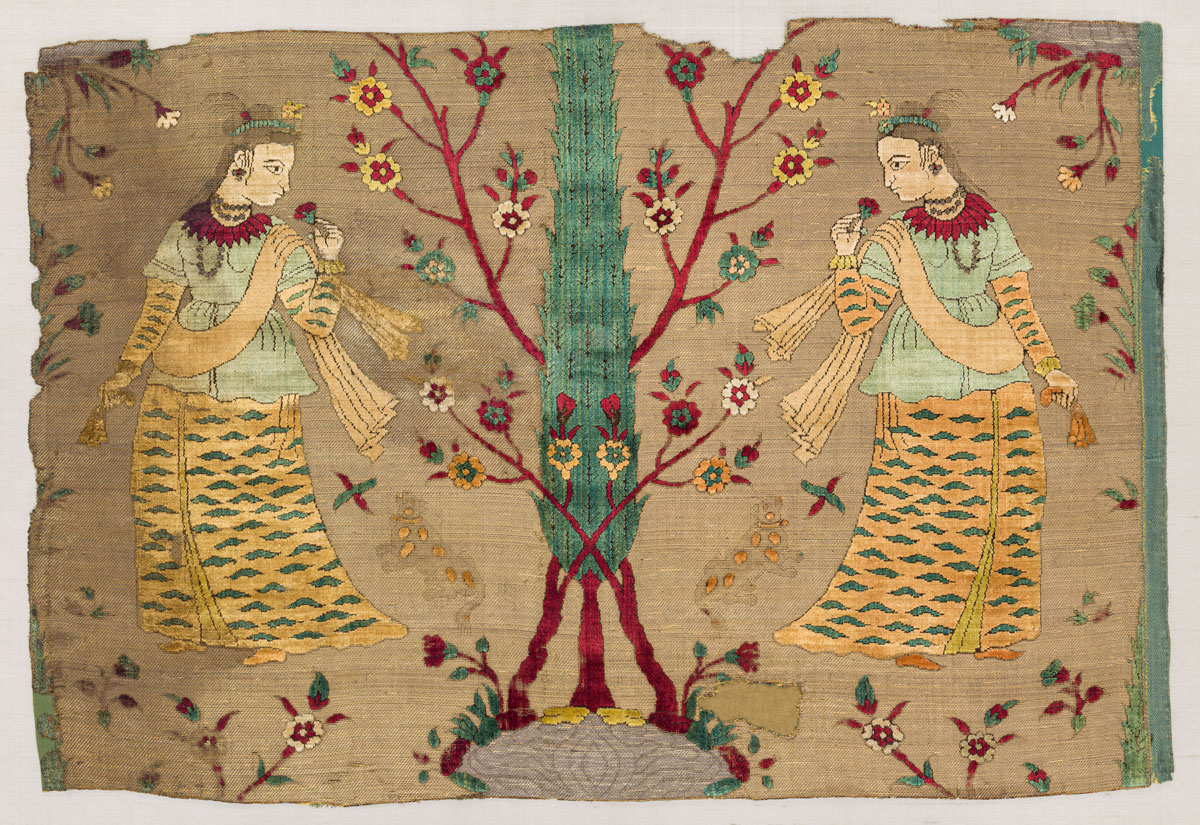
Velvet, Western India (Gujarat), early 17th century silk and metal threads, Abegg-Stiftung, inv. no. 437 | This colourful velvet showing two women on either side of a cypress tree against a background covered all over ingold thread was clearly influenced by Iranian models.

Sash (detail of a decorative panel), Iran, late 18th century, silk and metal threads, Abegg-Stiftung, inv. no. 415 | Patterned sashes were worn mainly by court officials, who wound them round their outer garments several times, leaving the decorative panel to drape down from the waist.