Villa Abegg

The Founder’s Private Home is now a Museum, Guided Tours Every Afternoon from 26 April to 8 November 2026

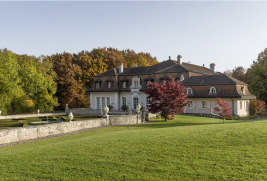
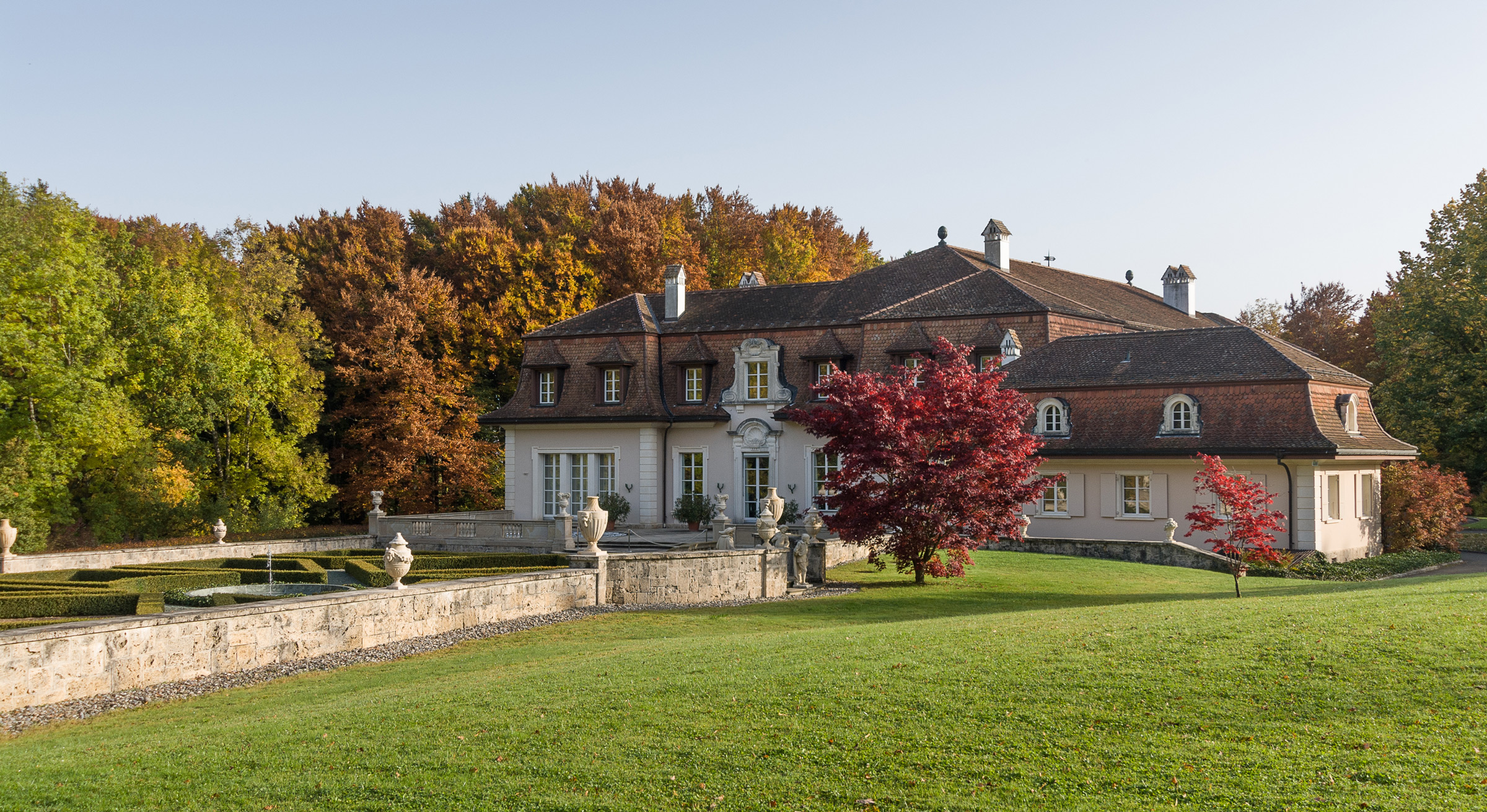
When the Abegg-Stiftung was founded in 1961, Werner and Margaret Abegg already had plans to open their home to the public at some future date. In both period and theme, the Villa Abegg was intended to complement and augment the institute’s collections. Architecturally, the villa completed in the late 1960s follows the North Italian Baroque, as represented by the school of Filippo Juvara (1678 – 1736). The formal gardens and fountains belong to a similar tradition. The reception rooms on the ground floor are appointed with historical wall panelling, chandeliers and furniture, and decorated with paintings, sculpture and tableware. The Villa Abegg nevertheless retains the character of an inhabited home that visitors may visit, rather like invited guests, in small groups only. Every year, these guided tours of the villa single out a different work of art or group of objects for attention.

Baroque game board

The exterior surfaces are decorated with inlaid veneers of differently coloured woods to form playing boards for chess and Nine Men’s Morris. When opened, the interior surfaces serve as a board for Trictrac. This marquetry, produced in southern Germany, offers insight into the refined techniques and the materials employed.

A Library in the Tower

This circular, two-storey space is fitted with built-in bookshelves. The historical items of furniture, tapestries, sculptures and a large globe make it an inspiring place in which to read and study.
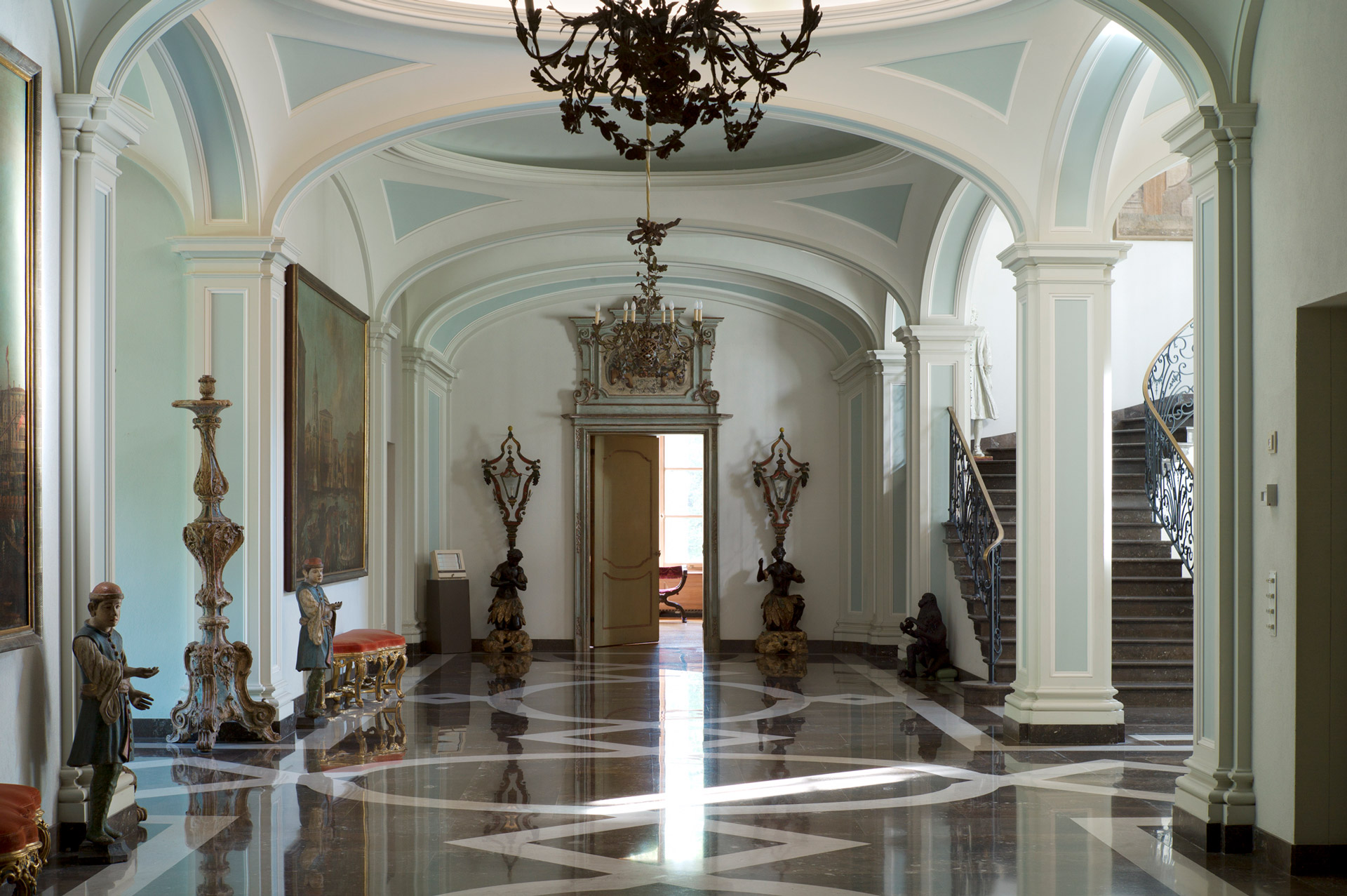
Spacious Entrance Hall

The interior architecture of the hall in Northern Italian Baroque style quotes the grand staircase of Palazzo Madama in Turin. The inlaid marble floor finds its model below the arcades of the Doge’s Palace in Venice.

Memories of Venice

Painted Venetian commodes, tables and chairs revive the eighteenth century. The furniture of this room also includes a mirror and a chandelier of coloured glass.