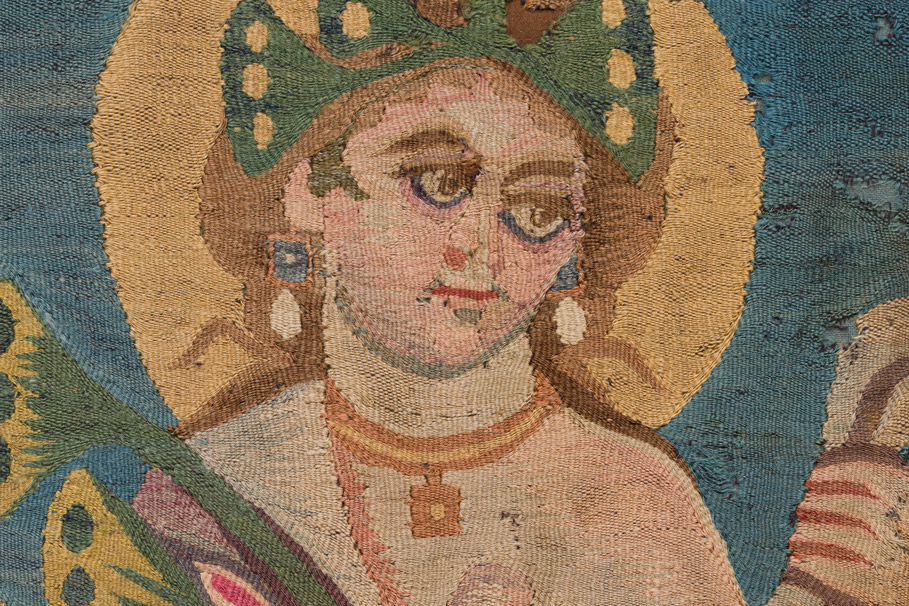
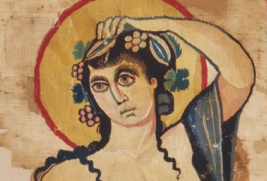
The scenes depicted on the textiles reflected contemporary notions of happiness and the ideal life. Among the most frequent themes were music and dance, eroticism and joie de vivre. Also popular were aristocratic pastimes such as hunting, which in Late Antiquity were prerogatives of the upper echelons only. | Peacock. Detail of a hanging, tapestry in linen and wool, Eypt, 4th–6th century, inv. no. 1639

Similarly popular were images that turned on the passage of time or the eternal cycle of nature. These might show personifications of the four seasons or depictions of he twelve months of the year, which in turn expressed the hope of a fine harvest, stability, and the dependable recurrence of good fortune. | Detail of a hanging with depictions of the months, tapestry in linen and wool, Egypt, 4th–6th century, inv. no. 1638

One technical peculiarity were the resist-dyedfabrics. Being light weight, they could be used for many different purposes. Another advantage of them was that their patterns were visible on both sides. They were created by first painting a linen fabric with resin and wax. When the fabric was then dipped in a dyeing vat, the painted areas did not take up the dye. | Fragment of a resist-dyed fabric with birds and plant motifs, linen, Egypt, 4th–6th century, inv. no. 5574

Large bolsters were an important feature of ancient domestic culture. They were used both in bedchambers and at feasts and banquets, where they served as upholstery for couches made of wood or stone. In most cases, the coverings were made of woollen fabrics that were not just soft and pliable but also hard-wearing. | Fragment of a woollen fabric with animals, Egypt, 5.–6. century, inv. no. 142